Not sure if this blog on BFSI CRM contains quality information?
Try our 1-minute short audio summary to decide. 🎧
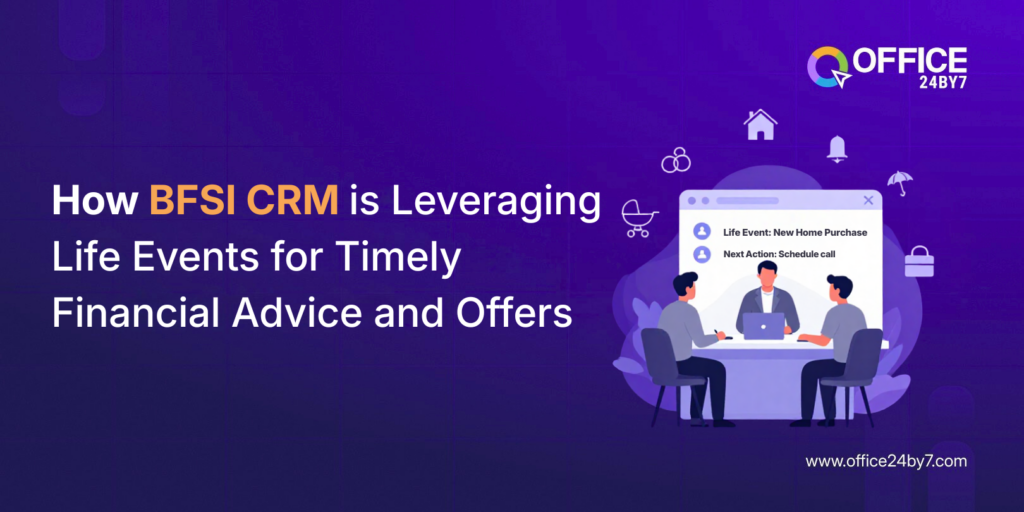
BFSI CRM systems excel at leveraging life events, like marriage, home purchases, or job changes, for delivering personalized financial advice at precisely the right moment. Both timing and personalization are considered critical factors for achieving growth in the banking and financial sector. According to Deloitte’s research insights, 74% of financial services customers expect personalized services in 2025.
When a customer gets married, buys a new home, or changes jobs, their financial needs shift dramatically. These are the moments when people are most open to advice, when a bank can strengthen trust by being proactive rather than reactive. Unfortunately, traditional processes and disjointed communication make it difficult to recognize and respond to these changes in time. This is why BFSI CRM is important.
A CRM designed for banking, insurance, and wealth management helps institutions capture life events, track changes, and trigger relevant financial advice or offers instantly. It bridges the gap between what customers expect and what institutions deliver, transforming data into timely, human-centered engagement.
To understand how this works, let’s first look at what life events really mean in the financial world.
- Understanding Life Events in Financial Services
- How BFSI CRMs Capture and Identify Life Events
- How BFSI CRM Triggers Timely Financial Advice and Offers
- How CRMs Personalize Financial Advisory Journeys
- Compliance, Consent, and Ethical Personalization
- Key Benefits of Life-Event-Based CRM for Financial Institutions
- How Office24by7 BFSI CRM Supports Life-Event-Driven Financial Engagement
- Conclusion
Understanding Life Events in Financial Services
Every major milestone in life reshapes a person’s financial reality. When financial institutions recognize key moments, they can provide solutions that feel relevant and timely instead of random offers and information.
A BFSI CRM centralizes these details. When a customer updates their profile or makes a key transaction, the CRM links that event to their financial journey and prompts an advisor to respond with suitable products or guidance.
To enhance engagement, many banks utilize an integrated cloud telephony service within their CRM. It allows advisors to connect with customers instantly through click-to-call pop-ups, ensuring that congratulations or advice arrive exactly when needed.
What Qualifies as a “Life Event” in a Financial Context
Life events in banking and insurance include any changes to income, dependents, or responsibilities, such as marriage, childbirth, home purchase, or retirement. Each of these creates a need for new financial tools.
For example, a marriage record in the CRM could automatically schedule a conversation about family insurance or joint savings plans. Similarly, a property loan approval might trigger mortgage protection recommendations.
Relationship managers use click-to-call software built into the CRM to reach customers directly at these moments, turning what could have been a delayed email into a meaningful real-time conversation.
Why Timing Matters in Financial Advice
When life changes, financial priorities change overnight. Offering retirement plans two months after a client announces retirement, or pitching a home loan long after the purchase, means missing the emotional timing that drives decisions.
A CRM ensures outreach happens when intent is highest. Advisors receive instant notifications and can respond through channels customers prefer, whether that’s a phone call or a quick message. This builds confidence that the institution truly understands them.
To maintain momentum, CRMs rely on built-in task management software. It automatically assigns follow-ups to specific team members and tracks completion, ensuring every opportunity is handled without delay.
How BFSI CRMs Capture and Identify Life Events
Financial institutions already collect mountains of data. The challenge lies in connecting the dots, recognizing which data points represent meaningful life events. CRMs do this through direct inputs, behavioral analysis, and human interaction.
Often, customers share life updates themselves: a name change, a new address, or the addition of a spouse as a nominee. Once entered, the CRM instantly records and categorizes these details, triggering workflows for relevant products or services.
For instance, if a customer updates their profile to reflect marriage, the CRM might assign a financial advisor to discuss family insurance options or joint savings accounts. Advisors can track these changes anywhere using mobile CRM dashboards that sync data in real time.
Sometimes, life events reveal themselves through patterns. A larger monthly deposit might mean a promotion. A joint home loan application can imply marriage. Frequent tuition payments may indicate a child’s enrollment in school.
CRMs integrated with core banking and policy systems interpret these clues. Once a potential event is detected, automated alerts notify the right advisor to reach out. This integration ensures speed and accuracy.
A connected call center solution lets agents note life-event information during customer interactions, ensuring even conversational insights are captured and acted upon.
Not everything can be automated. Relationship managers and wealth advisors still play a vital role in recognizing life changes. If a client casually mentions “planning to retire soon,” the advisor logs it into the CRM, which then triggers a workflow to suggest pension plans or annuities.
Every task generated from such inputs is tracked, ensuring accountability until follow-up is complete. The system keeps departments aligned, from insurance to investment planning, so nothing slips through.
Once captured, these insights set the stage for timely, personalized financial engagement.
How BFSI CRM Triggers Timely Financial Advice and Offers
After detecting a life event, the CRM moves from awareness to action. Automated workflows, contextual communication, and intelligent recommendations ensure customers get advice at the right moment.
Automated Workflows and Task Management using BFSI CRM
Life events in banking and insurance include anything that changes income, dependents, or responsibilities. Common examples include:
- Marriage: Triggers family insurance or joint savings plans.
- Childbirth: Prompts child education savings or health coverage.
- Home purchase: Activates mortgage protection recommendations.
- Retirement: Suggests pension plans or annuity options.
Relationship managers use click-to-call software built into the CRM to reach customers directly at these moments, turning delayed emails into real-time conversations.
Contextual Communication Channels in BFSI CRM
Different customers prefer different communication styles. Modern CRMs meet them where they are through integrated channels:
- Cloud telephony: Immediate voice calls via click-to-call.
- WhatsApp bot & SMS: Quick updates and confirmations.
- Email marketing: Detailed educational content and guides.
- Omnichannel flow: Seamless coordination across all preferred channels.
These tools ensure personalized, compliant outreach through the customer’s chosen method while respecting privacy preferences.
Product Recommendations and Cross-Selling Triggers
Every life event signals potential new needs. A birth might trigger child education planning; a promotion might prompt investment diversification.
CRMs analyze patterns and recommend products that genuinely fit. Advisors then personalize the discussion based on financial goals, ensuring customers see value rather than sales pressure.
These workflows support natural up/cross-selling, helping institutions deepen relationships while maintaining a customer-first approach.
A Marketing Automation Tool
makes all the difference!

How CRMs Personalize Financial Advisory Journeys
No two clients share the same financial path. CRMs use segmentation and advisor collaboration to tailor interactions so every engagement feels one-to-one.
Segmentation and Financial Profiling
CRMs categorize clients by life stage, risk appetite, and financial behavior. A young professional, a mid-career executive, and a retiree all receive communication relevant to their needs.
When a customer’s income rises, the system alerts wealth advisors to recommend new investment opportunities. Personalized broadcasts through voice broadcasting services can share updates on market trends or new portfolio options with entire segments at once.
Human-Digital Collaboration
CRMs don’t replace advisors; they make them smarter. When a couple applies for a joint loan, the CRM automatically updates their marital status, sends an informational message about family insurance, and alerts their advisor for a follow-up meeting.
This ensures human advice is perfectly timed with digital support. Private, secure communication between clients and advisors is maintained through virtual number services, which mask personal contact details while enabling direct discussions.
By combining human empathy with system-driven precision, institutions build relationships that are both efficient and meaningful.
Compliance, Consent, and Ethical Personalization
Financial personalization must never compromise ethics. CRMs play a crucial role in ensuring every engagement follows compliance standards and customer consent preferences.
Data Privacy and Opt-In Mechanisms
Each CRM profile stores consent preferences, what type of messages the customer has agreed to receive, and on which channels. This transparency helps banks comply with GDPR, RBI, and IRDAI regulations while maintaining customer trust.
An IVR system embedded within the CRM can even record verbal consent or allow clients to confirm participation in offers through secure voice prompts.
Audit Trails and Controlled Automation
Every triggered message, call, or offer is logged automatically, along with its source data and timestamp. This creates a complete audit trail, simplifying regulatory reporting and internal reviews.
In addition, missed call services provide a simple, non-intrusive way for customers to request follow-up calls or express interest in specific offers without sharing sensitive data online.
This combination of compliance and transparency ensures personalization never crosses ethical boundaries.
Key Benefits of Life-Event-Based CRM for Financial Institutions
Life-event-driven engagement delivers measurable business gains and stronger customer relationships. Financial institutions adopting these systems report:
- Many organizations observe 30-40% higher cross-sell and up-sell success through contextual outreach.
- Faster collaboration between advisory, underwriting, and service teams.
- Improved customer satisfaction due to timely, relevant communication.
- Stronger loyalty and retention because customers feel understood.
Banks also use integrated WhatsApp and email marketing software to continue nurturing clients after each major milestone, sharing planning guides, tax tips, or reminders aligned with their evolving financial goals.
How Office24by7 BFSI CRM Supports Life-Event-Driven Financial Engagement
Office24by7 CRM is designed to help financial institutions turn customer milestones into meaningful conversations. It unifies automation, analytics, and communication in one system, making it easier for advisors to act quickly.
With omnichannel marketing tools, advisors can see life-event triggers in real time and respond through the customer’s preferred channel.
For example, if a CRM detects that a client’s salary has increased, it immediately alerts their wealth manager to suggest upgraded investment options. If a policyholder opens a joint account, the CRM recommends family health coverage and schedules a follow-up reminder.
Timely updates are shared through SMS broadcasting, ensuring customers receive confirmations, reminders, and congratulatory messages without delay.
This seamless coordination turns what used to be reactive selling into proactive relationship management.
Conclusion
Life events are powerful opportunities for connection. There are moments when customers genuinely need financial guidance, and when institutions can build lasting trust.
A BFSI CRM ensures those moments never go unnoticed. By combining intelligent automation, human insight, and secure communication, it helps banks, insurers, and wealth managers deliver the right advice at the right time.
With the right systems in place, financial institutions move beyond transactional service to become lifelong partners in their customers’ financial journeys, proving that personalization isn’t just good marketing; it’s good banking.
The most effective organizations use the best sales CRM platforms, like Office24by7, to transform timing into trust and relationships into results.
Call us at +91-7097171717 or email sales@office24by7.com and transform your growth strategy today!