Not sure if this blog on cloud telephony with AI contains quality information?
Try our 1-minute short audio summary to decide. 🎧
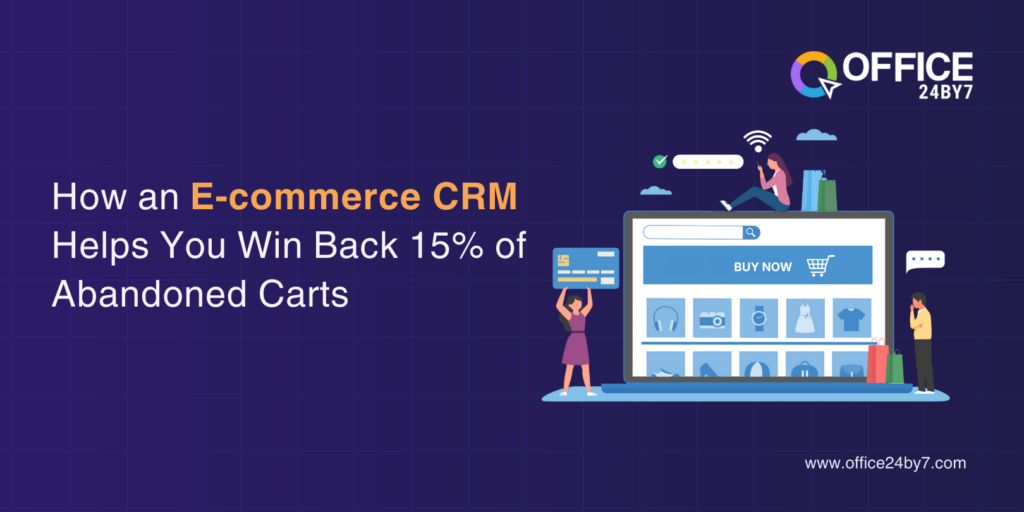
Nearly 7 out of 10 online shoppers abandon their carts before checkout, according to a 2025 Baymard Institute report. Most of these sales aren’t truly lost; they’re simply paused. Cart abandonment often reflects hesitation, distraction, or friction in the checkout process rather than rejection of your brand. A modern E-commerce CRM helps you respond at the right moment, turning potential customers into buyers without having to manually chase them.
Abandoned carts represent lost revenue and missed insight. Without centralized tracking, businesses fail to understand why customers drop off. A CRM system is essential for tracking every customer interaction, from product views to checkout attempts. It empowers teams to respond swiftly and effectively by utilizing integrated task management software, ensuring that no opportunity is overlooked. This comprehensive approach enhances customer experience and drives sales efficiency. By identifying high-intent versus casual abandoners, recovery workflows become smarter and more effective.
According to Shopify, automated cart recovery campaigns can boost revenue by up to 20%. Behavioral studies also show that 56% of online buyers delay checkout to compare prices or reconsider purchases, highlighting the opportunity for timely intervention.
- Why Customers Abandon Carts (and How an E-commerce CRM Fixes It)
- Real-Time Triggers with an E-commerce CRM
- How E-commerce CRM Personalization and Upselling Drive Repeat Sales
- Handling Checkout Breakdowns and Support with E-commerce CRM
- Measuring Success and Turning Recovered Carts into Long-Term Customers
- Why Office24by7 E-commerce CRM Is the Complete Solution
- Final Thoughts
Why Customers Abandon Carts (and How an E-commerce CRM Fixes It)
Cart abandonment happens far more often than businesses expect, and most of the time, it has nothing to do with the product itself. Shoppers usually drop their carts because something in the buying experience creates hesitation, doubt, or friction. By understanding what causes these interruptions, businesses can design better recovery strategies and create a smoother path to purchase. Using E-commerce CRM Insights helps identify these roadblocks in real time and respond with timely, relevant messages that bring shoppers back before the sale is lost. Here are some reasons why customers abandon their carts:
Unexpected Costs at Checkout
One of the most common reasons shoppers leave is the sudden appearance of extra charges. When shipping fees, taxes, or handling costs show up at the end of the journey, customers feel caught off guard. Even small, unexpected amounts can break trust and make them abandon their purchase.
Complicated or Slow Checkout
A checkout experience that feels long, slow, or confusing pushes customers away. If pages lag or the process asks for too many details, shoppers quickly lose patience. They expect fast and frictionless payments, and when that doesn’t happen, they move on.
Concerns About Payment Security
Shoppers need to feel safe during their purchase. When the checkout page looks outdated, lacks clear security badges, or fails to display trust signals, customers hesitate. The fear of unreliable payments makes them exit instantly. This is where click-to-call services within a CRM can reassure customers instantly by connecting them to support.
Poor Mobile Shopping Experience
Most customers browse and shop on their phones. If the mobile site is hard to use, buttons overlap, images don’t load well, or forms are difficult to type into, users struggle to complete the purchase. A poor mobile experience is one of the biggest drivers of cart abandonment.
Unclear or Delayed Delivery Timelines
Shoppers want clarity on when their order will arrive. If the delivery date looks too far away, they rethink the purchase. Uncertainty around timelines often sends them to competitors offering clearer or faster delivery. Uncertainty around timelines often sends them to competitors offering clearer or faster delivery.
Missing Product Details or Reviews
Customers rely heavily on product descriptions, reviews, images, and return policies to make confident decisions. When this information is incomplete or unclear, hesitation rises. Shoppers leave to find details elsewhere, and many never return.
The Psychology Behind Cart Abandonment
At the core of abandonment is doubt about value, timing, or trust. For example: A shopper adds a pair of ₹1,200 sneakers to their cart and is ready to check out.
But when they reach the final step, they see a ₹199 shipping charge added to the order.
Suddenly, the purchase doesn’t feel like a good deal anymore.
They close the tab and decide to “think about it.”
A smart E-commerce CRM identifies this drop-off trigger and automatically sends a message like:
“Your sneakers are still in stock! Enjoy FREE shipping if you complete your order today.”
This small reassurance often brings shoppers back because the main reason for hesitation is removed. Voice broadcasting services help automate these timely messages efficiently.
With a predictive and data-driven E-commerce CRM, brands can tell the difference between serious buyers and casual browsers. This helps them send messages that feel relevant rather than intrusive, increasing the chances of winning customers back at the right moment.
Real-Time Triggers with an E-commerce CRM
The CRM tracks every shopper action in real time, from product views to checkout attempts, and triggers reminders the moment the drop-off occurs. Timing is everything, and catching shoppers while their purchase intent is fresh increases recovery chances.
Because the CRM sees these moments in real time, it can trigger the right response at the right second, not hours later when the customer has already forgotten about the purchase.
For example, if someone drops off right at the payment step, the CRM can instantly send a reminder through a WhatsApp bot, an SMS, or an email saying, “Your checkout wasn’t completed. Want to finish your order?”
This quick nudge works because the shopper’s intention is still fresh. Platforms like Office24by7 E-commerce CRM make this even more powerful by adding communication tools such as virtual number services, click-to-call software, and IVR system integration. That means businesses can reach customers fast, through multiple channels, and recover sales before they’re lost.
Next, let’s see how automation strengthens that connection
Minimize your work efforts with automations!

Automated Cart Recovery Flows using E-commerce CRM
Automation is the backbone of effective cart recovery. An E-commerce CRM can send an initial reminder within 20–30 minutes of abandonment and a follow-up a few hours later, increasing urgency without feeling intrusive.
High-value carts can trigger personalized sequences, while low-value carts receive concise nudges that maintain profit margins. Escalation rules ensure customers who click but don’t purchase receive messages on alternate channels, maximizing recovery chances.
Relying solely on email reduces recovery success. An omnichannel marketing approach ensures your messages reach shoppers on their preferred platforms, SMS, email, WhatsApp, or push notifications, maintaining consistency and engagement without redundancy.
Example:
Let’s say a shopper adds ₹5,000 worth of skincare products to their cart and abandons during shipping selection. The E-commerce CRM immediately detects this drop-off and sends a friendly WhatsApp reminder within 30 minutes:
“Still thinking it over? Your skincare essentials are waiting. Complete your order and enjoy fast delivery.”
A few hours later, if the order is still incomplete, the CRM sends a follow-up email with more clarity:
“We noticed you paused at shipping. Here’s a quick breakdown of delivery options to help you decide.”
If the shopper clicks the email but doesn’t complete the purchase, the CRM escalates the flow and sends an SMS with a limited-time incentive:
“Finish your order today and get free shipping. Offer valid till midnight.”
This multi-step process feels natural, helpful, and well-timed. It reaches the shopper across different channels, keeps their interest alive, and gently guides them back to checkout, all without manual effort from the business.
Pro Tip: Action Steps to Reduce Abandonment
If you’re setting up automated cart recovery workflows in your E-commerce CRM, use these steps to keep campaigns effective and customer-friendly:
- Benchmark your cart‑abandonment rate: and identify key drop‑off points: cart page? Checkout? Payment? Shipping cost shock?
- Audit your checkout UX: show all fees early, enable guest checkout, minimize fields, show trust badges, and improve mobile usability.
- Implement a CRM or marketing automation platform: that tracks user behavior and allows follow-up via email/SMS when abandonment occurs. You can consider Email management and automation for seamless follow-ups.
- Run small tests: try different follow-up timings, different messages (discount, reminder, urgency), and measure the conversion uplift.
- Iterate and optimize: nothing stays perfect forever; track metrics such as recovered carts, conversion rate uplift, and overall user satisfaction.
Now, let’s dive into how CRM-driven personalization and upselling drive repeat purchases and long-term growth.
How E-commerce CRM Personalization and Upselling Drive Repeat Sales
Personalization goes beyond reminders. By analyzing browsing history, past purchases, and cart contents, the CRM crafts messages that feel human and relevant, reducing hesitation and building trust. This personalization helps bring shoppers back. Instead of sending a generic “Complete your purchase” message, an E-commerce CRM looks at the shopper’s browsing history, cart details, and preferences to create reminders that feel natural and meaningful.
The CRM can send these personalized messages through multiple channels like email, SMS, WhatsApp, or push notifications. This matters because people respond differently on different channels; some check WhatsApp instantly, some only respond to emails, and some prefer SMS. Omnichannel personalization ensures the right message reaches the shopper in the place they are most active.
Example:
If someone leaves running shoes in their cart, the CRM can automatically send a message like:
“Still thinking about your running shoes? They’re ready for you, and now with an extra 10% off.”
The message can include the shoe’s image, the size they selected, and a direct link to checkout. This level of detail helps shoppers remember exactly what they left behind and reduces resistance to returning.
Beyond simple recovery, an E-commerce CRM also uses predictive analytics to recommend products after a purchase, creating natural upselling and cross-selling opportunities.
Contextual Messaging for Every Shopper
As we have established, a proficient E-commerce CRM helps you talk to shoppers in a way that feels personal, not automated. It looks at what people browse, what they’ve bought before, and what they keep coming back to. Then it sends messages that actually make sense to them.
Instead of a basic “Complete your purchase,” the CRM can send something like:
“Your favorite organic coffee is almost out of stock. Want to grab it before it sells out?”
Messages like these feel helpful, familiar, and relevant. They show shoppers that the brand understands their needs, making them far more likely to return and complete the purchase.
Predictive Analytics to Drive Sales through E-commerce CRM
Analytics help businesses shift from reactive to proactive engagement. If a shopper normally buys every 45 days but hasn’t returned in 60, the CRM can automatically send a quick nudge or an offer. This simple, proactive message often brings the customer back before they forget or turn to another brand. This helps reduce customer loss and increases their overall value to the business.
Example:
If a customer buys a face serum, the CRM might send a follow-up message a week later:
“Customers who bought this serum also loved this moisturizer. Want to try it?”
Or if a customer buys coffee every 30 days but hasn’t ordered in 45 days, the CRM can send:
“Running low? Your favorite blend is back in stock.”
This kind of timely, helpful outreach increases repeat purchases, raises average order value, and makes customers feel understood, not targeted. Outbound marketing campaigns can amplify this by proactively reaching dormant customers with personalized offers.
Some businesses use a virtual number service for follow-ups. This helps customers reach support quickly if they have questions before placing another order. It makes the shopping experience smoother and more reassuring for them.
Predictive analytics help an E-commerce CRM understand customer habits. It notices when someone usually reorders, how long they go between purchases, and when they might be losing interest. Instead of waiting for a customer to disappear, the CRM steps in with a timely reminder.
By reaching people at the right moment, businesses reduce churn, increase repeat orders, and keep customers feeling valued.
Handling Checkout Breakdowns and Support with E-commerce CRM
Checkout failures are one of the most frustrating moments for both shoppers and businesses. A customer is ready to buy, the cart is full, the intent is high, and then a payment error, a slow-loading page, or a technical glitch stops everything. Most shoppers don’t retry; they simply leave.
This is where an E-commerce CRM becomes critical. It bridges the gap between automated recovery and human support, making sure every issue is detected, followed up on, and resolved before the customer gives up completely. IVR system integration can further automate these touchpoints, for instance, guided responses.
Task Management Software: Turning Checkout Failures Into Quick Action
When something breaks at checkout, response speed matters. Task management inside an E-commerce CRM automatically creates tasks for high-risk events like failed payments, error-page exits, or customer inquiries. Each task is assigned to the right team member with context, priority, and deadlines, so nothing falls through the cracks.
Because all tasks are tracked in one place, support and sales teams stay aligned. They know which issues need urgent attention, which customers have been contacted, and which follow-ups are pending. This tight coordination improves response time and directly reduces lost orders.
Ticketing Management: Clear Workflows for Faster Resolutions
Some issues require more than a quick task; they need structured handling. The ticketing management system captures payment failures, complaints, or repeated checkout errors and routes them through organized workflows. Every ticket includes customer history, issue type, and communication logs, making it easier for agents to resolve problems on the first attempt.
The CRM also tracks ticket status in real time, ensuring teams don’t miss updates or leave customers waiting. Whether the case needs escalation or cross-team collaboration, the system keeps everyone informed and accountable.
Inbound Marketing Integration: Keeping Every Customer Response Connected
Shoppers often respond through multiple channels when something goes wrong, email, WhatsApp, SMS, or chat. Without a centralized system, these messages can sit unseen in different inboxes.
Inbound marketing integration inside an E-commerce CRM brings all these responses into one unified view. Whether a customer replies to a cart reminder, asks about a failed payment, or requests support, the CRM captures it instantly and links it to the correct customer profile.
This ensures conversations stay intact, customers get quicker answers, and teams never miss a chance to recover the sale. WhatsApp Bot can automate instant replies for common queries, reducing friction and increasing customer satisfaction.
Measuring Success and Turning Recovered Carts into Long-Term Customers
E-commerce CRM provides analytics dashboards to track recovery rates, revenue impact, and channel performance. Businesses can refine workflows, messages, and channel selection based on real data. More importantly, it ensures that customers who return once continue to engage with the brand over time.
Post-purchase engagement, such as onboarding messages, targeted SMS broadcasting, delivery updates, loyalty programs, and up/cross-selling recommendations, businesses can transform a one-time recovery into a long, profitable customer relationship.
Analytics, Reports, Dashboards, and ROI Tracking
With E-commerce CRM automation, brands have a complete view of cart recovery performance through intuitive reports and dashboards.
Teams can track:
- How many abandoned carts were recovered
- Which channels performed best (SMS, WhatsApp, email, voice)
- Revenue generated from recovery campaigns
- Customer segments most likely to return
- The exact points where users drop off
This data-driven approach and visibility help teams refine their strategy instead of guessing. If a certain message, timing, or channel performs better, they can optimize future workflows instantly. With this continuous improvement cycle, recovery ROI goes up while operational effort goes down.
Post-Purchase Engagement and Customer Loyalty
Recovering a cart is only the beginning. What truly drives growth is what you do after the purchase. An E-commerce CRM helps businesses continue the conversation in a meaningful way, not with generic messages, but with thoughtful, timely communication that makes customers feel supported.
Over time, this strategy builds trust, encourages repeat purchases, and increases lifetime value.
Once a shopper completes their order, the sales CRM software can guide them through a well-planned post-purchase journey. This includes:
- Simple onboarding tips
- Helpful delivery updates
- Loyalty program invitations
- Personalized product suggestions based on what they bought
The CRM can also send automated feedback requests, making customers feel heard while giving brands valuable insights.
These small but meaningful touchpoints create a consistent experience that shoppers appreciate. Over time, they lead to higher trust, repeat purchases, and stronger relationships — turning a one-time recovered cart into a long-term, loyal customer.
Why Office24by7 E-commerce CRM Is the Complete Solution
Office24by7 E-commerce CRM helps businesses recover abandoned carts and grow customer value by seamlessly connecting data, automation, and insights in one platform. As a result, it consolidates customer activity, purchase history, and interactions, giving teams a clear view of behavior and intent.
With this insight, businesses can send timely, personalized recovery messages through email marketing software, SMS broadcasting, and WhatsApp Bot, while automating follow-ups to increase conversions. Post-purchase, the CRM further supports upselling, cross-selling, and repeat engagement, thereby turning one-time buyers into loyal customers.
Additionally, dashboards and analytics measure what works, helping teams optimize campaigns and allocate resources efficiently. By unifying workflows for marketing, sales, and support, Office24by7 ensures businesses act quickly, intelligently, and consistently; consequently, it becomes a truly complete solution for e-commerce growth.
Final Thoughts
Cart abandonment happens, but you don’t have to lose customers for good. By implementing an E-commerce CRM with automated, personalized, and omnichannel recovery workflows, businesses can not only reclaim lost revenue but also nurture relationships and ultimately turn hesitation into lasting loyalty. Recover up to 15% of abandoned carts while building a predictable and scalable revenue stream.
Start recovering abandoned carts today with Office24by7’s E-commerce CRM. Test automated workflows, measure results, and scale what works to see how even a missed sale can become a valuable connection.
Call us at +91-7097171717 or email sales@office24by7.com and transform your growth strategy today!
Start your 15-day free trial at Office24by7.