Try our 1-minute short audio summary of this blog on How to choose the right IVR Solution for your enterprise. 🎧
Every phone call represents a customer who has already decided to reach out. How you handle that call often determines whether they become a loyal customer or continue searching for another provider. It could be a new enquiry, a support request, or an existing customer looking for quick assistance.
As a small enterprise, when your business grows, answering every call manually becomes difficult. Missed calls, repeated transfers, and delayed responses can frustrate customers and cost you potential sales. That’s where an IVR for a small enterprise becomes essential. It helps businesses answer calls automatically, direct customers to the right team, and deliver a more professional experience without increasing workload.
The challenge is choosing a solution that fits your business, not just today, but as it grows. This guide explains how an IVR works, when your business needs one, and the key factors to consider before making a decision.
- What Is an IVR for Small Enterprise and Why Does It Matter?
- Why an IVR for Small Enterprise Matters
- Is Your Business Ready for an IVR for Small Enterprise?
- Key Factors to Consider When Choosing an IVR for Small Enterprise
- Call Management, Analytics, and Reliability for an IVR Solution for Small Enterprise
- Essential IVR Features Every Small Business Needs
- Common Mistakes to Avoid When Choosing an IVR Solution for Small Enterprises
- Questions to Ask Before Choosing an IVR Solution for Small Enterprise
- Best Practices for Implementing an IVR Solution for Small Enterprises
- IVR Selection Checklist for an IVR for Small Enterprise
- Conclusion
What Is an IVR for Small Enterprise and Why Does It Matter?
Think about the last time you called your bank. You probably chose an option before speaking with a representative. That’s exactly how an IVR solution works. Instead of relying on someone to answer every call, the system routes customers to the right department based on their selection.
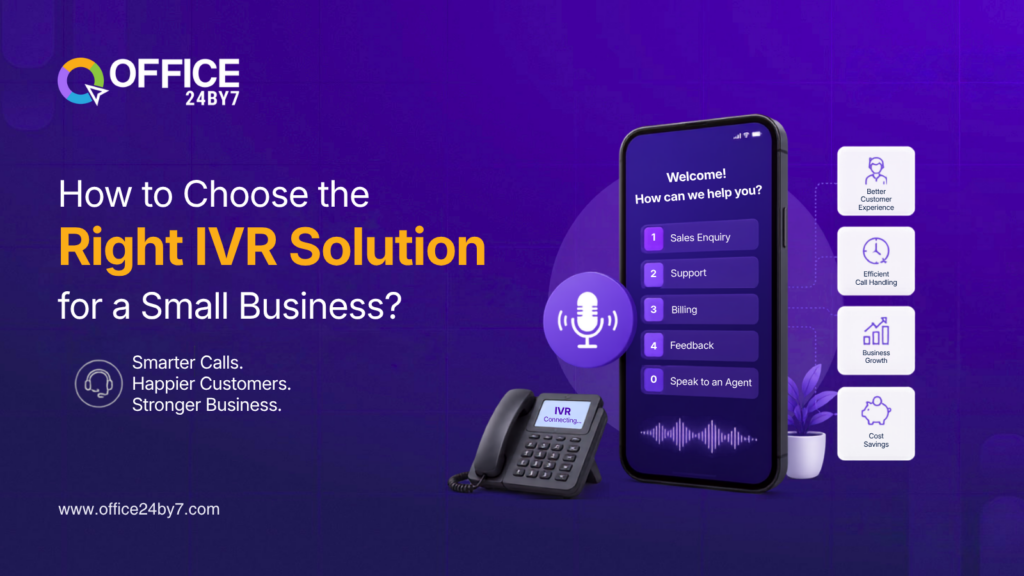
For example, a caller can press 1 for Sales, 2 for Customer Support, or 3 for Billing. The IVR immediately transfers the call to the appropriate team, reducing wait times and eliminating unnecessary transfers.
Today’s Office24by7 IVR services offer much more than automated menus. They integrate with cloud telephony services, customer data management, click-to-call software, and mobile CRM so employees can access customer information before answering the phone. This not only saves time but also helps deliver faster and more personalized service.
Why an IVR for Small Enterprise Matters
One of the biggest misconceptions is that IVR systems are only for large enterprises. In reality, small businesses often benefit the most because they have fewer people available to answer every call. According to HubSpot research, 90% of customers rate an immediate response as important when they have a service question.
Imagine your sales executive is speaking with a client while your support representative is resolving another issue. At the same time, a new prospect calls your business. Without an IVR, the caller may receive a busy tone or disconnect after waiting. With an IVR, the system answers immediately, shares relevant options, and directs the caller to the right person or records the request for a callback.
A customer calling your business doesn’t know how your teams are organised internally. They simply want the quickest route to someone who can help. That’s exactly what a well-designed IVR delivers. It answers every call consistently, guides customers through simple menu options, and connects them with the right department without unnecessary transfers. When combined with cloud telephony services, a missed call alert system, and a virtual number service, it creates a seamless communication experience for both customers and employees.

Related Reading
Is Your Business Ready for an IVR for Small Enterprise?
If you’re a small enterprise looking to enhance customer interaction, it’s essential to consider whether your business is ready for an IVR system.
Signs You Need an IVR Solution for Small Enterprise
Not every business needs an IVR immediately. Still, certain signs indicate that manual call handling is no longer enough.
If your team frequently misses calls during busy hours, transfers customers multiple times, or spends valuable time answering repetitive questions, it’s time to consider automation. Likewise, businesses expanding into new locations or adding more departments often struggle to manage customer communication efficiently without a structured call-routing system.
Consider a simple example. Your receptionist is away from the desk, one salesperson is on another call, and your support executive is assisting an existing customer. Meanwhile, three new customers call your business. Without an IVR, at least one of those callers may hang up. With a well-configured IVR, every caller receives immediate attention and reaches the appropriate queue.
Businesses already using workflow automation, a ticketing management system, or a task management software can integrate IVR into their existing workflows. Instead of functioning as a standalone phone solution, it becomes part of a connected communication ecosystem.
Key Factors to Consider When Choosing an IVR for Small Enterprise
Selecting an IVR isn’t about choosing the platform with the longest feature list. Instead, focus on solutions that improve customer communication, simplify daily operations, and support future growth.
Ease of Use and Customization for an IVR Solution for Small Enterprises
A good IVR should be easy to configure and update. Your team should be able to modify greetings, business hours, or routing rules without depending on technical support.
Choose a platform with a visual call-flow builder, flexible menu options, and multilingual support if your business serves diverse customers. If your communication platform also includes a voice broadcasting service, an audio conference system, and click-to-call functionality, your employees can manage customer interactions from a single interface, improving both productivity and customer experience.
Scalability and Integrations for a Growing Business
Your business may be small today, but your communication needs will change as you grow. That’s why scalability should be a priority when evaluating an IVR for a small enterprise.
A scalable IVR allows you to add new users, departments, locations, and call flows without disrupting daily operations. Instead of replacing your communication system every few years, you can expand it as your business evolves.
Just as important are integrations. An IVR becomes far more valuable when it connects with the tools your team already uses. For instance, integrating with Office24by7 sales automation software, lead generation software, and WhatsApp CRM automation gives employees instant access to customer information during calls.
Imagine a returning customer contacting your business. Rather than asking them to repeat their details, your team can immediately view previous interactions, support requests, and purchase history. This creates a smoother experience while helping employees resolve queries faster.
Businesses can create a connected customer journey by integrating IVR with CRM, marketing automation, and communication tools. This helps teams maintain customer context across every interaction. Whether a customer reaches out through a phone call, email, or WhatsApp, your team works with the same information, ensuring a seamless experience.
Call Management, Analytics, and Reliability for an IVR Solution for Small Enterprise
An effective IVR should do more than answer calls. It should help your business understand, manage, and improve customer communication.
Start by evaluating call-routing capabilities. Features such as department-based routing, time-based routing, and skill-based routing ensure customers reach the right person without unnecessary transfers. As a result, wait times decrease and customer satisfaction improves.
Next, look at reporting and analytics. Without data, it’s difficult to know whether your communication process is working efficiently. Comprehensive analytics dashboards can reveal call volumes, peak business hours, missed calls, and agent performance. When combined with ROI tracking, these insights help you identify bottlenecks and make informed improvements.
Reliability is equally important. Even the most feature-rich IVR solution will create problems if customers experience poor call quality or service interruptions. Before making a decision, evaluate the provider’s uptime record, infrastructure, and support capabilities.
Businesses that integrate IVR with an omnichannel marketing platform, customer data management, marketing automation, and workflow automation gain a significant advantage. Customer information flows seamlessly between departments, enabling sales, marketing, and support teams to work from a single source of truth.
Ultimately, the best IVR for a small enterprise isn’t the one with the most features. It’s the one that helps customers reach the right people quickly, supports your employees, and grows alongside your business.
Essential IVR Features Every Small Business Needs
Choosing the right IVR solution is crucial for small enterprises looking to enhance customer experience and streamline communication as they grow.
Must-Have Features in an IVR System
Every IVR solution offers a different set of features, but not all of them are essential for a growing business. Instead of choosing a system with the longest feature list, focus on the capabilities that improve communication and simplify daily operations.
Start with an auto attendant that answers every call professionally and routes customers without requiring manual intervention. Pair this with multi-level IVR menus to organise departments or services while keeping navigation simple.
Your IVR should also support call forwarding, business-hour routing, and call recording. These features ensure customers reach the right employee, even when teams work remotely or outside regular office hours.
Equally important is a reporting dashboard. Monitoring call trends helps managers identify missed opportunities, improve response times, and optimize customer service.
If you’re already using Office24by7 missed call services, click-to-call software, and a virtual number service, these features work together to create a seamless communication experience. Likewise, integrating an IVR solution with lead nurturing, sales funnel management, and customer data management ensures every customer interaction contributes to long-term business growth rather than becoming an isolated conversation.
Common Mistakes to Avoid When Choosing an IVR Solution for Small Enterprises
When selecting an IVR solution for small enterprises, it’s crucial to be aware of common pitfalls to ensure a smooth implementation and effective customer interaction.
Choosing Features Instead of Business Needs
During the buying process, it’s tempting to compare providers based on the number of features they offer. In practice, though, the best IVR solution is usually the one your team actually uses every day. However, more features don’t always translate into better results.
Before selecting an IVR solution, identify the communication problems you’re trying to solve. If your business mainly struggles with missed calls and inefficient routing, a simple, reliable solution will deliver more value than a complex platform filled with unused features.
At the same time, don’t overlook the customer experience. Long menus, confusing prompts, and endless call transfers frustrate callers. A well-designed IVR should help customers reach the right department within a few steps.
Ignoring Future Growth
Growth often exposes communication gaps that weren’t obvious in the early days. What worked for five employees may struggle to support twenty.
Choose a platform that can support additional users, departments, and locations without requiring a complete migration. Before launching, test every call flow from a customer’s perspective. Small improvements at this stage can prevent bigger issues later.
Questions to Ask Before Choosing an IVR Solution for Small Enterprise
Choosing the right IVR solution is crucial for small businesses to enhance customer communication and streamline operations as they grow.
Evaluate the Platform
Ask whether your team can manage the IVR without technical assistance. Can you update greetings, change routing rules, or add departments quickly? A flexible platform saves both time and effort.
Assess Reliability and Integrations
Next, learn about the provider’s uptime, infrastructure, and support. Reliable communication is essential because every missed call could mean a missed business opportunity.
It’s equally important to confirm whether the solution, like lead tracker software or sales automation software, integrates with your CRM. Connected systems reduce manual work while giving employees the information they need during customer conversations.
Understand the Support Experience
Finally, ask about onboarding, training, and technical support. A responsive vendor can make implementation smoother and help your team adopt the platform with confidence.
Related Reading
Best Practices for Implementing an IVR Solution for Small Enterprises
Implementing an IVR system can significantly enhance customer experience and operational efficiency for small enterprises.
Design the IVR Solution Around Your Customers
An IVR should make life easier for customers, not more complicated.
A customer calling your business doesn’t know your department structure; they simply want the fastest way to reach someone who can solve their problem. Keep menu options short, use simple language, and always offer an option to speak with a live representative. The easier you make the journey, the better the customer experience.
Improve the System Continuously
An IVR shouldn’t be treated as a “set it and forget it” tool. As your business grows, customer expectations change too. Reviewing your call flow every few months helps keep the experience smooth and relevant.
Businesses using workflow automation, marketing automation, customer data management, and analytics dashboards can use these insights to improve both customer service and internal efficiency.
Similarly, integrating IVR with outbound marketing automation, WhatsApp automation, and email marketing automation creates a consistent customer experience across every communication channel.
IVR Selection Checklist for an IVR for Small Enterprise
Before making your final decision, ask yourself these questions:
- Is the IVR easy to manage?
- Can it grow with my business?
- Does it offer intelligent call routing?
- Will it integrate with my CRM and existing business tools?
- Does it provide reporting and analytics?
- Is the platform reliable and secure?
- Can employees access it remotely?
- Does the provider offer dependable customer support?
If your answer is “yes” to most of these questions, you’re likely choosing a solution that will continue supporting your business as it grows.
Conclusion
Choosing the right IVR for a small enterprise isn’t about buying the most advanced solution; it’s about finding one that fits your business goals and delivers a better customer experience.
The ideal IVR should simplify communication, reduce manual work, and integrate with the systems your team already uses. More importantly, it should scale as your business grows without disrupting your operations.
If you’re evaluating IVR solutions, look beyond individual features. Focus on how well the platform supports your customers, your employees, and your long-term business goals. Office24by7 brings IVR, cloud telephony, CRM automation, and workflow automation together so growing businesses can manage customer communication from one platform instead of several disconnected tools. This connected approach helps teams communicate more efficiently, respond faster, and build stronger customer relationships.
As your business expands, a well-planned IVR becomes more than a call-routing tool. It becomes the foundation of a smarter, more reliable communication strategy. Call +91-7097171717 or email sales@office24by7.com to start utilizing the ideal IVR solution for your business.