
Every client relationship starts with a single enquiry. But a prospective client who calls after an arrest, accident, or contract dispute rarely waits for a callback. If your receptionist misses the call or your team follows up the next day, the client has often contacted another firm. With a business that relies on trust and responsiveness, any loose ends in the intake process can cause potential clients to go elsewhere.
CRM automation helps law firms capture every enquiry, automate follow-ups, and manage client communication across every stage of the client journey. Rather than relying on spreadsheets, shared inboxes, or handwritten reminders.
This guide will discuss how CRM automation can help law firms boost client intake, streamline communication, increase consultations-to-client conversions, and strengthen client relationships through workflow automation and centralised customer data management.
- Why Client Intake Determines Whether You Win New Clients
- What an Effective Client Intake Process Looks Like
- How CRM Automation Improves Every Stage of Client Intake
- Convert More Consultations into Paying Clients
- Manage Client Relationships Beyond the First Consultation
- Measure What Actually Drives Law Firm Growth
- Why Modern Law Firms Are Investing in CRM Automation
- Conclusion
Why Client Intake Determines Whether You Win New Clients
Client intake is a critical process that significantly influences your ability to attract and retain new clients.
The Hidden Cost of Delayed Responses
A missed call rarely stays just a missed call. It quickly becomes a lost enquiry, a missed consultation, and eventually a client who chooses another law firm instead. Without a missed call service, firms may never know how many potential clients they failed to reconnect with. In slow motion, late callbacks cause the same issue: a prospective client waits, loses faith, and goes elsewhere. All of these holes drain sales from the funnel, and the company doesn’t even realize that the leak is occurring.
Industry research supports the need to be quick to respond. Hennessey Digital’s 2025 Lead Form Response Time Study analysed more than 1,300 law firm websites and over 150,000 lead interactions, highlighting how widely response times vary across firms. The findings reinforce that responding quickly is critical to converting prospective clients into consultations. This highlights why modern law firms benefit from automated client intake and follow-up workflows that ensure every enquiry receives a timely response.
Why Client Experience Starts Before the First Consultation
A prospect’s first impression forms the moment someone dials a number or fills out a form, long before they sit down with an attorney. A quick, professional response builds trust immediately. Click-to-call functionality helps lawyers return enquiries within seconds, while cloud telephony automatically logs every conversation and keeps client records up to date. Consistent communication reassures prospective clients that your firm stays organized, responds promptly, and handles legal matters professionally.
Client acquisition begins with the first interaction, not the consultation.
What an Effective Client Intake Process Looks Like
An effective client intake process is crucial for establishing strong client relationships and ensuring smooth service delivery from the very beginning.
The Five Stages of a Modern Legal Client Journey
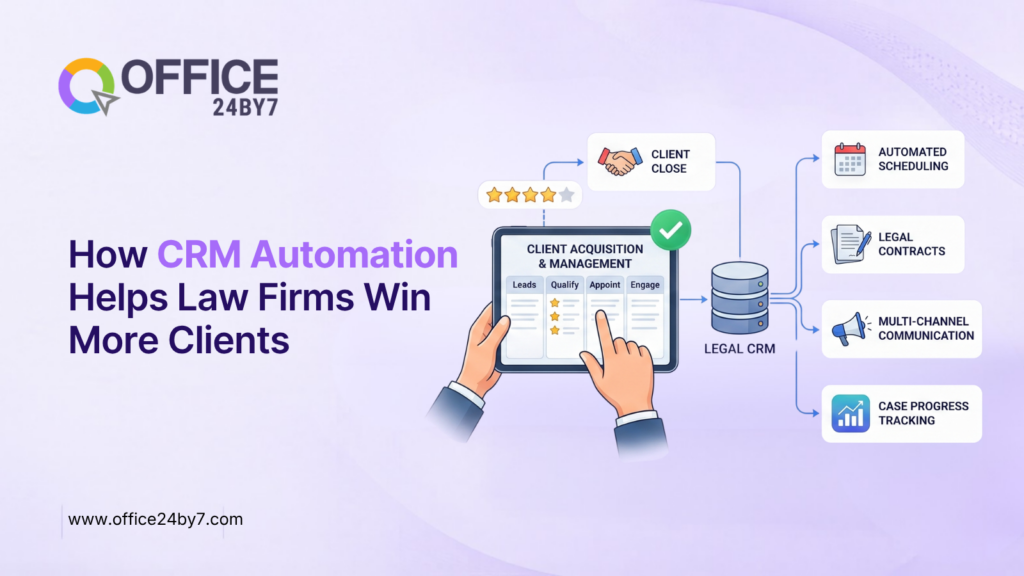
A modern legal client journey moves through five distinct stages. It starts with the initial enquiry, then moves into lead qualification, where lead tracker software helps a firm understand which enquiries are worth prioritizing. From there, the process moves to scheduling the consultation, followed by follow-up and reminders to keep the appointment on track. Finally, client onboarding closes the loop, often supported by a virtual number service that keeps every call tied to the right record.
Common Breakdowns in Manual Intake Processes
Manual client intake often breaks down in predictable ways. Teams let spreadsheets become outdated, bury important enquiries in shared inboxes, miss follow-ups because ownership remains unclear, and create confusion with duplicate records. These issues damage trust before the client relationship has even begun.
A lead management CRM eliminates these gaps by giving every enquiry a single, trackable record from the moment it arrives. Lead generation automation captures client information automatically, reducing manual work and improving accuracy.

Related Reading
How CRM Automation Improves Every Stage of Client Intake
CRM automation streamlines client intake processes, enhancing efficiency and improving client experience at every stage.
Capture Every Enquiry Automatically
Office24by7 IVR services route incoming calls to the right team member without a prospect ever sitting on hold. Every enquiry automatically creates a lead, attaches the call recording, assigns the matter to the right lawyer or intake executive, and schedules the next follow-up without manual data entry. Website forms feed directly into the same system, and missed call services convert even an unanswered call into a lead record instead of a lost opportunity.
Respond Faster with Automated Workflows
Once an enquiry comes in, automatic lead creation removes the need for anyone to manually enter details into a spreadsheet. Click-to-call functionality lets a team member reach out in a single click, and intelligent lead routing sends each enquiry to the associate best positioned to handle it. Instant notifications, powered by sales automation software, make sure no lead sits untouched for long.
Keep Follow-Ups Consistent Across Every Channel
Clients don’t all prefer the same channel, so a firm needs to meet them where they are. WhatsApp automation, SMS marketing automation, and email marketing automation work together to keep follow-ups consistent, no matter which channel a client responds to. Consultation reminders reduce no-shows, and follow-up sequences built on drip marketing automation keep the conversation moving without anyone having to remember to send the next message manually.
Automation ensures consistency while keeping communication personal.
Convert More Consultations into Paying Clients
Maximize your consultations and transform potential clients into loyal supporters with effective strategies.
Create a Structured Lead Nurturing Workflow
A consultation booked is not a client won. A firm needs a clear process from the first call to the retainer, including acknowledgment, booking, reminders, document requests, and follow-up using lead nurturing software. Each step keeps the client involved and reduces the obstacles that make people stop responding after a promising first call.
Build Trust Through Consistent Communication
Timely updates and personalized messaging do more to build trust than any pitch. Reduced response time shows a client that their case matters, and clear next steps, supported by workflow automation, remove the uncertainty that makes people hesitate before committing to a firm.
Example automated workflow:
Enquiry Received → Instant Acknowledgement → Lead Qualification → Consultation Scheduled → Reminder Sent → Documents Collected → Consultation Completed → Retainer Shared → Client Onboarded
Manage Client Relationships Beyond the First Consultation
After the client signs up, the focus of the work shifts from acquisition to case management. A task management system keeps teams on top of internal reminders and case updates, while a ticketing management system with document tracking ensures nothing slips through the cracks. Mobile CRM also allows attorneys to see the status of their cases and provide updates to them from outside of the office, which is important when a client calls while an associate is in court.
Communication doesn’t end after onboarding. Your team resolves issues quickly through the audio conference system, so clients receive timely status updates instead of waiting for days. A voice broadcasting service enables legal teams to communicate with multiple stakeholders simultaneously, streamlining their collaboration across a case.
CRM automation isn’t just about converting leads; it’s about the entire client lifecycle.
Measure What Actually Drives Law Firm Growth
Once you automate your intake and follow-up processes, you can identify what’s driving results. This is where CRM analytics becomes valuable. Lead response time measures how quickly your firm engages with new enquiries. The enquiry-to-consultation rate and consultation-to-client conversion rate reveal where prospects drop out of the client journey. Referral and repeat client rates, tracked through CRM reporting and ROI analysis, indicate whether clients trust your firm enough to return or recommend your services.
Analytics dashboards turn day-to-day activity into actionable insights. Lead source analysis identifies the best channels for generating leads, while team productivity data reveals where the bottlenecks are. Conversion trends, pipeline visibility, and digital marketing insights help law firms identify bottlenecks and optimize their client acquisition strategy before performance declines.
A law firm’s CRM analytics dashboard and sales dashboard connect directly with an omnichannel marketing platform, providing leadership with a single view of the performance of each channel.
- Metrics worth tracking:
- Lead response time
- Consultation-to-retainer conversion rate
- Lead source (channel) performance
- Cost per acquired client
Reorganize your office with Office24by7!

Why Modern Law Firms Are Investing in CRM Automation
Today’s legal clients expect faster service, greater transparency, and a seamless experience from their first enquiry to case resolution. CRM automation helps law firms meet these expectations while improving operational efficiency and supporting sustainable growth.
Today’s clients expect digital-first communication. They want faster responses, clear updates on their matters, and personalised interactions instead of generic replies. These expectations can be met throughout the process, with inbound marketing and outbound marketing automation working together.
Growth without structured processes increases operational risk. Firms have more control over who has access to sensitive information with centralised client records, role-based access and audit trails. Client data management remains in line with evolving client data protection expectations with the adoption of DPDPA-ready processes, while confidential client information remains protected via disciplined customer data management, not through a load of spreadsheets and inboxes.
Today, law firms compete on client experience as much as legal expertise.
Conclusion
Winning more clients isn’t just about generating more enquiries; it’s about responding to them quickly, communicating consistently, and delivering a professional experience from the very first interaction. Law firms that streamline client intake and follow-up convert more of the opportunities they already receive while building stronger relationships throughout the client lifecycle.
Office24by7 CRM helps law firms centralise enquiries, automate workflows, manage communication across multiple channels, and gain complete visibility into every stage of the client journey. From the first phone call to case closure, every interaction is organised, tracked, and easier to manage.
Ready to modernise your client intake process? Book a demo with Office24by7 to see how CRM automation can help your law firm respond faster, improve client experience, and win more clients. You can also call us at +91-7097171717 or email sales@office24by7.com to get started.