Try our 1-minute short audio summary of this blog on ‘Why Hybrid Teams Need Cloud Telephony‘. 🎧
A customer calls to continue a conversation from yesterday. The employee who handled it is working from home today. Someone else picks up, and the customer explains everything again, from the start.
This isn’t a hybrid work problem. It’s a continuity problem that hybrid work made impossible to ignore.
Remote teams didn’t change how customers talk to businesses. It changed how hard it became for businesses to keep every conversation connected across people, locations, and devices.
- How Hybrid Work Revealed the Need for Cloud Telephony
- The Real Value of a Customer Call Goes Beyond the Call
- How Cloud Telephony Solves Communication Gaps
- Customers Don’t See Channels. They See One Conversation
- 5 Questions to Ask Before Investing in Cloud Telephony
- Why Cloud Telephony Is Becoming a Business Communication Platform
- Why Cloud Telephony Matters for Hybrid Teams
How Hybrid Work Revealed the Need for Cloud Telephony
The office solved more communication problems than businesses realized. A quick question to a colleague, a conversation overheard nearby, or a reminder from someone sitting across the desk often filled missing gaps.
Once teams moved across locations, those informal fixes disappeared. What remained was the actual communication system businesses had built, and for many companies, it was never designed to support distributed teams.
That informal backup system worked until teams stopped sharing a room. Once people started working from different cities, the workaround disappeared. What remained was the actual system underneath it, and for most businesses, that system was thin.
Customers Still Expect One Connected Business
Customers never signed up for a distributed workforce. They expect the person who answers to know who they are. This holds whether the call lands in an office, a spare bedroom, or a co-working space from another city.
Businesses that rely on cloud telephony services keep that expectation intact by attaching every call to the customer’s record, not to the phone that rang. Add a virtual number service, and a distributed workforce no longer means disconnected customer knowledge. A field team checking a mobile CRM before a callback sees the same history a desk agent would.

Related Reading
The Real Value of a Customer Call Goes Beyond the Call
A call ends in minutes. The information inside it can influence a customer relationship for months.
The problem is, most businesses capture the call outcome, but lose the context that makes the next conversation better.
Every conversation leaves behind information
A ten-minute call carries more than a resolved query. It carries intent, an objection the customer raised, a price they hesitated on, and a promise made to follow up by Friday.
Most businesses let all of it evaporate the moment the call ends. Nobody logs it. Nobody tags it. It exists only in the memory of whoever picked up the phone.
What Happens When Customer Context Lives with Employees, Not Systems
An employee leaves, and every unwritten commitment leaves with them. A lead gets handed to a new agent who has no idea what was already promised. A support case gets escalated, and the second agent starts the diagnosis over.
None of these are edge cases. They happen every week in businesses that never built a system for capturing what calls actually contain.
The moment customers feel the gap: team handoffs
Most communication breakdowns don’t happen during the first conversation. They happen when responsibility moves from one person to another.
A sales executive may understand a customer’s requirements perfectly, but the next person handling the account may only see a name and a phone number. A support agent may receive an issue without knowing the conversation that happened before the ticket was created.
For customers, it feels like starting over. For businesses, it creates delays, missed opportunities, and unnecessary friction.
Cloud telephony connected with a CRM system helps preserve that context by keeping customer interactions available across teams instead of leaving important details with individuals.
Why Customer Context Is Becoming a Competitive Advantage
Two businesses can sell the same product at the same price. The one that remembers the customer wins the renewal. This is why customer data management now matters as much as the sales pitch itself.
A lead tracker software tool that logs every touchpoint turns scattered conversations into a timeline. Pair it with analytics dashboards, and a manager can see where lead nurturing stalls before a deal is lost, not after.
How Cloud Telephony Solves Communication Gaps
Making calls was never the hardest part. The real challenge was keeping customer conversations connected when people, teams, and locations changed.
The shift is already visible across industries. As businesses manage customer conversations across offices, remote teams, and multiple communication channels, the need for connected systems has become more important than ever.
A customer should not experience a different level of service simply because the employee handling the conversation is working from another location. Businesses need communication systems that provide visibility, consistency, and access to customer context wherever teams operate.
One Place for Every Customer Conversation
Cloud telephony changes this by making sure customer conversations stay with the business, even when the people handling them change.
Manual work that businesses quietly accepted for years starts to disappear once telephony connects to CRM. Nobody scrolls through WhatsApp to find a past chat. Nobody flips through a notebook or calls a colleague to ask what was said.
IVR services route calls based on what the customer needs, not who happens to be free. Click-to-call software cuts dialing time for agents handling volume. Behind both, workflow automation and a shared task management system keep follow-ups from slipping through, while sales automation software moves qualified leads forward without a manager chasing status updates.
Customers Don’t See Channels. They See One Conversation
Businesses may manage phone calls, WhatsApp chatbot messages, emails, and support requests separately.
Customers don’t. They simply see one conversation with one company, and expect every interaction to continue from where the last one ended.
Businesses see separate channels. Customers see one thread.
A customer starts on WhatsApp, calls an hour later, then gets an email reply, then raises a support ticket. Internally, that’s four systems. To the customer, it’s one exchange with one business, and they expect whoever answers next to know all of it.
Consistency builds trust before it improves efficiency
A sales agent who references what was said on WhatsApp closes faster than one starting cold. A support agent who already sees the customer’s ticket history sounds competent instead of scrambled. WhatsApp CRM automation keeps that thread visible, and pairing it with email marketing automation and SMS marketing automation stops each channel from acting like its own silo.
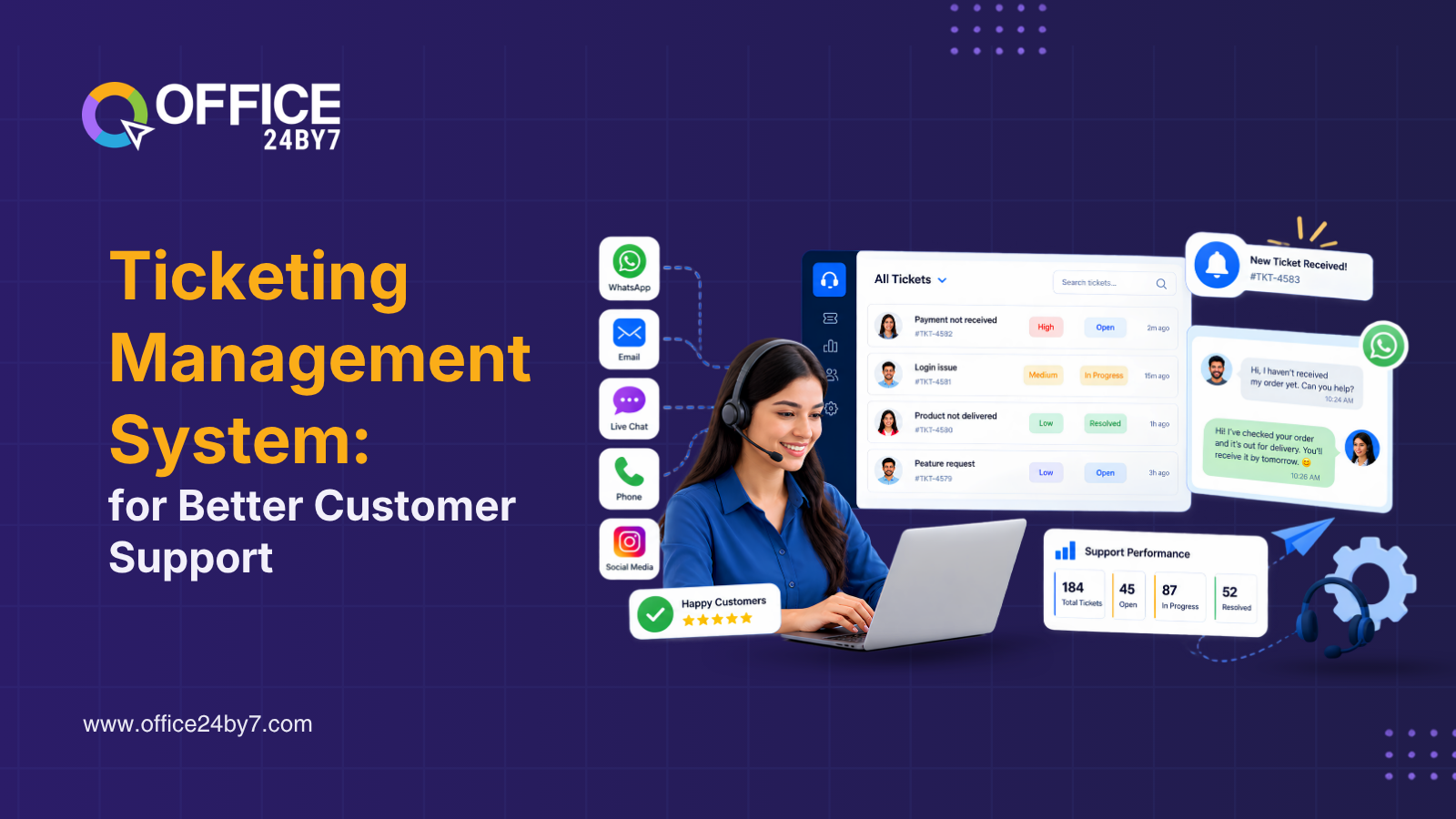
A ticketing management system tied to the same omnichannel marketing platform as calling and messaging means one customer record, not five disconnected ones.
5 Questions to Ask Before Investing in Cloud Telephony
Will every call automatically become part of the customer’s history? Can staff work from any location without switching to personal numbers? Does the platform integrate with CRM instead of creating another data silo?
Can a manager follow a conversation without chasing five people for updates? Will it still hold up as new channels get added, from a voice broadcasting service to future communication channels?
Evaluate systems on continuity and visibility, not on how many buttons they add to a dashboard. A platform that answers yes to all five is infrastructure. One that answers yes to two is just a traditional phone system with additional features.
Why Cloud Telephony Is Becoming a Business Communication Platform
Businesses no longer want a separate tool for calling, another for CRM, another for marketing, and a fourth for support. Each disconnected tool is one more place customer context can get lost between shifts, handoffs, or time zones.
Businesses are moving toward platforms that bring calling, customer data, automation, and reporting together instead of managing them across disconnected tools. Platforms like Office24by7 combine cloud telephony, CRM, WhatsApp automation, and reporting into one workspace, helping distributed teams access the same customer history instead of piecing together information from multiple tools. An agent in Bangalore and a manager in Delhi can work with the same context, even when they are handling the customer from different locations.
Lead generation software feeds customer enquiries into the same mobile CRM that sales teams use while managing conversations. Analytics dashboards show the full picture without a separate export.
Related Reading
Why Cloud Telephony Matters for Hybrid Teams
Picture the same customer calling again next week.
This time, it does not matter who picks up the call, where that employee is working, or whether the conversation moves between teams. The customer does not need to explain the situation again because the business already has the context.
That is the real value of cloud telephony.
It is not just about answering calls from anywhere. It is about helping businesses maintain continuity when teams, locations, and customer touchpoints keep changing.
In a hybrid workplace, customers should never feel the distance between employees. The technology behind the conversation may change, but the experience should remain simple: the business remembers, responds, and follows through.
The businesses that succeed in hybrid work will not be the ones that simply answer more calls; they will be the ones that remember every conversation.
Transform your business communications into a connected experience. Reach out to Office24by7 today at +91 70971 71717 or sales@office24by7.com to schedule a personalized demo and empower your team with shared customer context.